
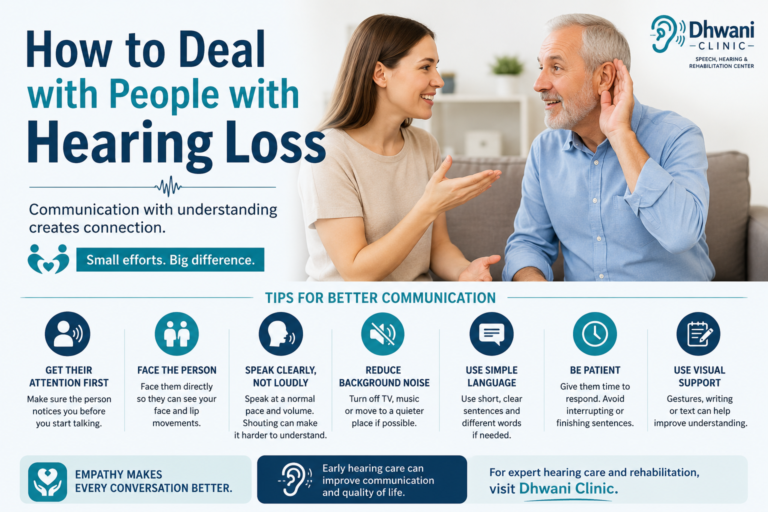
How to Deal with People with Hearing Loss
Hearing loss affects millions of people worldwide and can impact communication, relationships, education, and daily life. While hearing loss may create communication challenges, understanding and patience can make interactions much easier and more meaningful. Whether you are talking to a family member, friend, colleague, or neighbor, knowing how to communicate effectively with someone who has hearing loss helps build confidence and strengthens relationships.
At Dhwani Clinic, we believe that awareness and compassionate communication are just as important as medical treatment. Learning a few simple techniques can make a significant difference in helping individuals with hearing loss feel respected, included, and understood.
Understanding Hearing Loss
Hearing loss is not the same for everyone. Some people may struggle to hear soft sounds, while others may find it difficult to understand speech, especially in noisy environments. Hearing loss can be mild, moderate, severe, or profound, and it may affect one or both ears.
Common causes of hearing loss include:
Aging
Long-term exposure to loud noise
Ear infections
Genetic conditions
Head injuries
Certain medications
Congenital hearing impairment
Many people with hearing loss use hearing aids or cochlear implants, while others rely on lip-reading, sign language, or assistive listening devices.
Tips for Communicating with Someone with Hearing Loss
1. Get Their Attention First
Before speaking, make sure you have the person’s attention. You can gently wave, tap them on the shoulder, or call their name. Starting a conversation unexpectedly may cause them to miss the beginning of what you are saying.
2. Face the Person While Speaking
Always face the individual directly. Many people with hearing loss depend on facial expressions and lip movements to understand conversations. Avoid talking while looking away, covering your mouth, or walking into another room.
Good lighting also helps them see your face clearly.
3. Speak Clearly, Not Loudly
One of the biggest misconceptions is that shouting helps. In reality, shouting can distort speech and make it harder to understand. Instead:
Speak naturally.
Pronounce words clearly.
Maintain a moderate pace.
Pause between important points.
Clear speech is much more effective than loud speech.
4. Reduce Background Noise
Television, music, traffic, or crowded environments can make conversations difficult. Whenever possible:
Turn off unnecessary noise.
Move to a quieter location.
Sit closer during conversations.
A calm environment significantly improves communication.
5. Use Simple and Clear Language
If the person does not understand something, avoid repeating the exact same sentence multiple times. Instead, rephrase your message using different words.
For example:
Instead of saying:
“I’ll pick you up after the appointment.”
You could say:
“I’ll come to get you once the doctor visit is finished.”
Changing the wording often makes communication easier.
Be Patient and Respectful
Communication takes teamwork. Give the person enough time to respond without interrupting or finishing their sentences.
Avoid saying phrases like:
“Never mind.”
“It wasn’t important.”
“You wouldn’t understand.”
These comments can make someone feel excluded. Instead, repeat or explain your message with kindness.
Patience creates confidence and helps people with hearing loss participate fully in conversations.
Use Visual Communication
Visual cues can greatly improve understanding.
Helpful techniques include:
Facial expressions
Hand gestures
Body language
Written notes when necessary
Smartphone text or messaging apps
Many hearing-impaired individuals naturally combine listening with visual information to understand conversations more accurately.
Include Them in Group Conversations
Group discussions can be especially challenging because multiple people may speak at once.
To make group conversations easier:
Speak one person at a time.
Mention who is speaking.
Avoid talking over others.
Sit in a circle whenever possible.
Summarize important discussion points.
These simple adjustments ensure everyone feels included.
Understand Hearing Devices
Many individuals wear hearing aids or cochlear implants. These devices improve hearing but do not restore normal hearing completely.
Even with advanced hearing technology, people may still struggle in:
Restaurants
Family gatherings
Public meetings
Crowded events
Being supportive and understanding these limitations helps reduce frustration for everyone.
At Dhwani Clinic, specialists help patients choose the right hearing devices and provide guidance on using them effectively for better communication.
Encourage Professional Hearing Care
If someone frequently asks people to repeat themselves, increases television volume excessively, or struggles to understand conversations, they may benefit from a hearing evaluation.
Early diagnosis offers several advantages:
Better communication
Improved quality of life
Reduced social isolation
Better mental well-being
Access to suitable hearing solutions
Professional hearing assessments can identify the type and severity of hearing loss and recommend appropriate treatment options.
Support Emotional Well-Being
Hearing loss affects more than just hearing. Many people experience frustration, embarrassment, anxiety, or loneliness because communication becomes difficult.
You can provide emotional support by:
Listening patiently
Including them in conversations
Encouraging social activities
Celebrating progress
Respecting their communication preferences
A supportive environment helps improve confidence and overall mental health.
When to Visit a Hearing Specialist
Professional evaluation is recommended if someone experiences:
Sudden hearing loss
Ringing in the ears (tinnitus)
Difficulty understanding speech
Frequent requests for repetition
Ear pain or infections
Balance problems along with hearing difficulties
Early treatment often leads to better long-term outcomes.
At Dhwani Clinic, experienced hearing care professionals provide comprehensive hearing assessments, hearing aid consultations, speech and hearing rehabilitation, and personalized treatment plans for children and adults.
Conclusion
Knowing how to deal with people with hearing loss begins with empathy, patience, and effective communication. Speaking clearly, maintaining eye contact, reducing background noise, and respecting individual communication needs can make everyday conversations much more comfortable.
Hearing loss should never prevent someone from feeling connected with family, friends, or society. Small communication changes can have a lasting positive impact on a person’s confidence and quality of life.
If you or someone you know is experiencing hearing difficulties, Dhwani Clinic offers expert hearing evaluations, advanced hearing solutions, and personalized rehabilitation services to help individuals communicate confidently and live life to the fullest.