
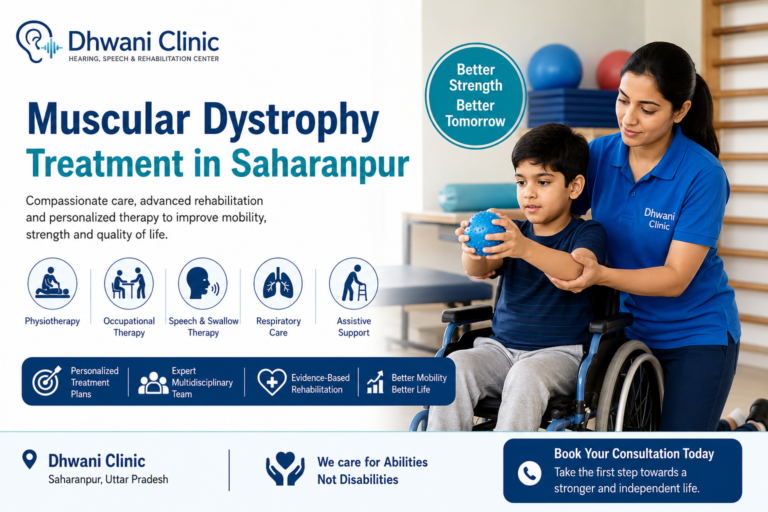
Muscular Dystrophy Treatment in Saharanpur: A Complete Guide to Better Mobility and Quality of Life
Muscular dystrophy is a group of genetic disorders that gradually weakens muscles, making everyday activities more challenging over time. While there is currently no permanent cure, early diagnosis, consistent rehabilitation, and the right medical care can significantly improve independence and quality of life. If you are searching for muscular dystrophy treatment in Saharanpur, understanding the available treatment options is the first step toward better management.
At Dhwani Clinic, patients receive personalized rehabilitation plans designed to support muscle function, mobility, communication, and overall well-being. With timely intervention, individuals living with muscular dystrophy can continue participating in school, work, and family life more confidently.
Understanding Muscular Dystrophy and Why Early Treatment Matters
Muscular dystrophy refers to inherited conditions that cause progressive muscle degeneration. Different types affect people differently, and symptoms may begin during childhood or adulthood. Common signs include:
Frequent falls
Difficulty climbing stairs
Trouble standing from a sitting position
Muscle weakness
Walking on toes
Poor balance
Fatigue during daily activities
Although the disease progresses over time, early intervention can slow functional decline and help maintain independence. Families seeking muscular dystrophy treatment in Saharanpur should consult experienced rehabilitation professionals as soon as symptoms appear.
Treatment usually combines multiple therapies rather than relying on a single solution. Every patient’s care plan is tailored according to age, symptoms, disease progression, and personal goals.
Treatment Options for Muscular Dystrophy
Successful management requires a multidisciplinary approach involving rehabilitation specialists, neurologists, physiotherapists, occupational therapists, and speech-language professionals.
Common components include:
Physical therapy to maintain muscle flexibility and strength.
Occupational therapy to improve independence in daily activities.
Speech and swallowing therapy when communication or swallowing becomes difficult.
Respiratory exercises to strengthen breathing muscles.
Assistive devices such as braces, walkers, or wheelchairs.
Nutritional guidance for maintaining healthy body weight.
Regular medical monitoring for heart and lung health.
Many families looking for muscular dystrophy treatment in Saharanpur benefit from combining these therapies into one coordinated rehabilitation plan.
An eight-year-old child began struggling with frequent falls and difficulty climbing stairs. His parents feared he would soon lose his independence. After beginning structured rehabilitation, regular exercise sessions, and family-supported home practice, his balance improved noticeably, and he became more confident in school activities. While muscular dystrophy remained a lifelong condition, consistent therapy helped him enjoy a far better quality of life than his family initially expected.
How Rehabilitation Improves Daily Life
Rehabilitation is one of the most important aspects of muscular dystrophy management. Instead of focusing only on symptoms, therapists work toward improving daily function and preventing unnecessary complications.
Benefits of rehabilitation include:
Better posture and balance.
Reduced muscle stiffness.
Improved walking ability for as long as possible.
Easier performance of daily activities.
Better breathing efficiency.
Improved speech clarity when affected.
Increased confidence and emotional well-being.
Patients receiving muscular dystrophy treatment in Saharanpur often notice that regular therapy helps them remain active longer while reducing the risk of secondary complications such as contractures and joint deformities.
Caregivers also receive education on safe transfers, home exercises, positioning techniques, and fall prevention, allowing therapy to continue beyond the clinic.
Why Choose Dhwani Clinic for Muscular Dystrophy Treatment in Saharanpur?
Choosing the right rehabilitation center plays a significant role in long-term outcomes. Dhwani Clinic follows an individualized approach that focuses on each patient’s unique needs instead of using the same treatment plan for everyone.
The clinic emphasizes:
Comprehensive functional assessments.
Personalized rehabilitation programs.
Evidence-based therapy techniques.
Family education and counselling.
Regular progress monitoring.
Child-friendly and adult-friendly therapy sessions.
Long-term support throughout rehabilitation.
Every therapy program is adjusted as the condition changes, ensuring patients continue receiving appropriate care at every stage.
Because muscular dystrophy affects each individual differently, treatment plans should evolve alongside changing physical abilities. Consistent follow-up allows therapists to modify exercises safely while helping patients achieve realistic goals.
The best outcomes are usually seen when therapy begins early, families stay actively involved, and patients remain committed to regular rehabilitation sessions. This collaborative approach improves independence, confidence, and overall quality of life despite the challenges of muscular dystrophy.
FAQs-
Q1. Is muscular dystrophy completely curable?
No. There is currently no permanent cure, but rehabilitation, medications, and supportive therapies can significantly improve quality of life and slow functional decline.
Q2. Who should seek muscular dystrophy treatment in Saharanpur?
Anyone experiencing progressive muscle weakness, frequent falls, difficulty walking, or having a confirmed diagnosis should consult rehabilitation specialists as early as possible.
Q3. Can physiotherapy help muscular dystrophy patients?
Yes. Physiotherapy helps maintain flexibility, improve mobility, reduce stiffness, and support independence in daily activities.
Q4. Does muscular dystrophy affect speech and swallowing?
Some forms may affect speech and swallowing muscles. Speech-language therapy can help improve communication and swallowing safety.
Q5. How often should rehabilitation sessions be attended?
The frequency depends on age, severity, and treatment goals. A rehabilitation specialist creates a personalized schedule after assessment.
Take the First Step Toward Better Care
If you are searching for reliable muscular dystrophy treatment in Saharanpur, early rehabilitation can make a meaningful difference. Dhwani Clinic provides individualized therapy programs designed to improve mobility, communication, independence, and overall quality of life. Schedule a professional assessment today and begin a personalized rehabilitation journey that supports long-term health, confidence, and everyday living.