
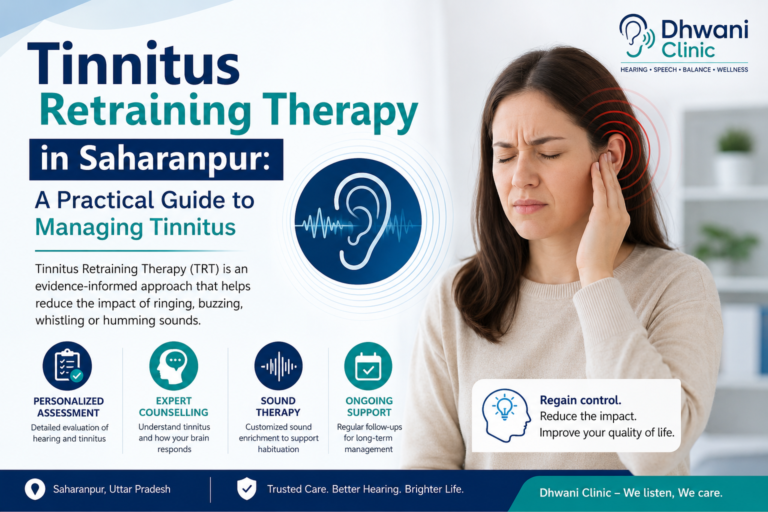
Tinnitus Retraining Therapy in Saharanpur: A Practical Guide to Managing Tinnitus
A constant ringing, buzzing, humming, or whistling sound can make quiet moments stressful. For people living with tinnitus, sleep, concentration, and daily life may become difficult. Tinnitus Retraining Therapy in Saharanpur offers a structured approach designed to reduce how strongly the brain notices and reacts to these sounds. At Dhwani Clinic, patients can receive assessment and guidance based on individual needs.
What Is Tinnitus Retraining Therapy?
Tinnitus Retraining Therapy is a management approach that combines sound therapy with educational counselling. Rather than promising to remove tinnitus, TRT aims to help the brain become less aware of the sound through a process called habituation.
During Tinnitus Retraining Therapy in Saharanpur, an audiology professional may first evaluate hearing ability, tinnitus characteristics, and possible triggers. Treatment can then be personalized.
TRT commonly involves:
Detailed tinnitus and hearing assessment
Counselling to understand tinnitus responses
Controlled background or sound therapy
Regular follow-up and progress monitoring
Practical strategies for sleep and daily activities
Habituation usually develops gradually over time.
How Can TRT Help People With Tinnitus?
The goal of Tinnitus Retraining Therapy in Saharanpur is to change the way tinnitus is perceived. When the brain repeatedly identifies tinnitus as important or threatening, people may become focused on it. TRT works toward reducing this attention and emotional reaction.
For example, one patient described nighttime ringing as the most frustrating part of the day. After evaluation, counselling, and recommended sound strategies, the patient gradually found the tinnitus less intrusive at bedtime. Experiences differ, showing why consistency matters.
At Dhwani Clinic, recommendations follow individual evaluation rather than a one-size-fits-all plan.
What Happens During Tinnitus Retraining Therapy?
A typical Tinnitus Retraining Therapy in Saharanpur plan may follow several stages.
Assessment: The audiologist reviews symptoms, hearing health, medical history, and tinnitus patterns.
Counselling: Patients learn how hearing pathways and brain responses can influence tinnitus awareness.
Sound therapy: Suitable low-level sounds may be recommended to reduce contrast between tinnitus and silence.
Monitoring: Follow-up appointments help assess progress and adjust the management plan.
Professional evaluation is important because tinnitus can have different causes. New tinnitus, one-sided tinnitus, pulsating sounds, dizziness, sudden hearing changes, or other unusual symptoms may require medical assessment.
Why Choose Professional Tinnitus Care?
Effective tinnitus management begins with understanding the person behind the symptom. Tinnitus Retraining Therapy in Saharanpur should be guided by qualified hearing-care professionals who can assess hearing, explain realistic expectations, and recommend appropriate strategies.
Dhwani Clinic focuses on patient education, hearing assessment, personalized planning, and follow-up support. Evidence-informed care and transparent communication can help patients make better decisions about long-term tinnitus management.
Frequently Asked Questions
1. Can TRT completely cure tinnitus?
TRT primarily aims to reduce tinnitus awareness and distress. Results vary depending on the individual and underlying cause.
2. How long does TRT take?
Habituation is gradual. The duration varies according to tinnitus severity, hearing status, consistency, and individual response.
3. Is sound therapy used in TRT?
Yes. Carefully selected sound enrichment may be used alongside counselling as part of the treatment approach.
4. Who should consider Tinnitus Retraining Therapy in Saharanpur?
People whose tinnitus affects sleep, concentration, emotional comfort, or everyday activities may benefit from a professional tinnitus assessment.
5. Do I need a hearing test before TRT?
A hearing evaluation is commonly useful because tinnitus and hearing changes can occur together.
If persistent tinnitus is affecting your daily routine, consider scheduling a professional hearing and tinnitus evaluation. Early assessment can identify hearing concerns, clarify suitable management options, and help you begin a structured path toward making tinnitus less disruptive.