
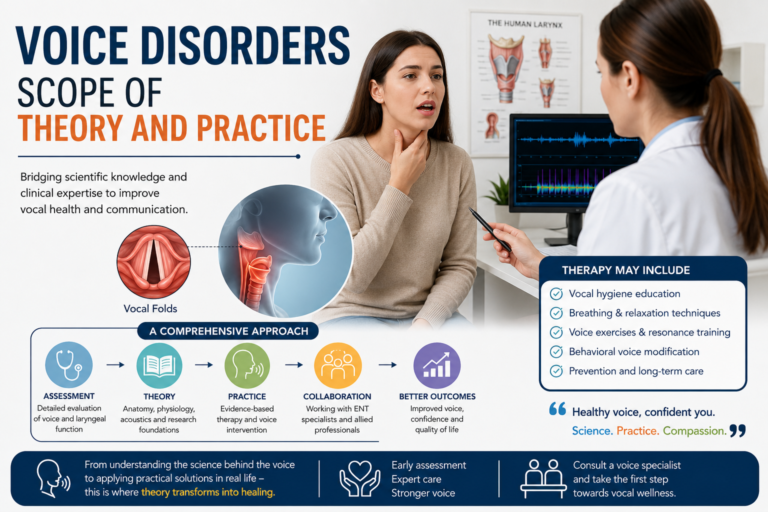
Voice Disorders Scope of Theory and Practice
A healthy voice helps people communicate, teach, sing, work, and express emotions with confidence. When the voice becomes hoarse, weak, strained, or painful, daily life can quickly become challenging. Understanding voice disorders scope of theory and practice allows patients, caregivers, students, and professionals to recognize how science and clinical care work together to improve vocal health. From identifying the causes of voice problems to providing effective treatment and rehabilitation, this field combines research, assessment, and evidence-based therapy. Whether a person develops a voice issue after prolonged speaking, surgery, illness, or aging, early evaluation often leads to better outcomes. Learning about this subject also encourages preventive habits that protect vocal health throughout life.
Understanding Voice Disorders and Their Clinical Scope
Voice disorders occur when the vocal folds or related structures fail to produce a normal voice. The result may include hoarseness, breathiness, vocal fatigue, reduced loudness, or changes in pitch. The voice disorders scope of theory and practice covers anatomy, physiology, acoustics, psychology, neurology, and speech-language pathology. Professionals study how the voice works, why disorders develop, and which treatments provide the best results.
Common causes include:
Vocal overuse or misuse
Infections affecting the throat
Vocal fold nodules or polyps
Neurological disorders
Acid reflux
Trauma or surgery
Aging-related vocal changes
Accurate diagnosis requires detailed history taking, perceptual voice assessment, instrumental evaluation, and collaboration with ENT specialists and speech-language pathologists. A complete understanding helps create individualized treatment plans rather than relying on generalized advice.
Theory Meets Practice in Voice Rehabilitation
Theory provides the scientific foundation, while practice transforms knowledge into patient-centered care. Clinicians evaluate breathing patterns, vocal quality, resonance, posture, and communication needs before recommending therapy.
Treatment may include:
Voice therapy exercises
Vocal hygiene education
Breathing and relaxation techniques
Resonance training
Behavioral voice modification
Medical or surgical referral when necessary
A teacher experiencing chronic hoarseness, for example, may improve through hydration, vocal rest, proper breathing, and guided therapy instead of continuing to strain the voice. Similarly, professional singers often benefit from preventive coaching before symptoms become severe.
At Dhwani Clinic, specialists focus on evidence-based assessment and individualized intervention to help patients regain comfortable, functional communication. Therapy goals are always based on the patient’s lifestyle, occupation, and long-term vocal requirements.
Why Early Assessment Makes a Difference
Many people ignore voice changes, believing they will disappear naturally. However, persistent hoarseness lasting more than two weeks deserves professional evaluation. Delayed treatment may allow a manageable condition to worsen.
Consider a school principal who frequently addressed large gatherings without amplification. Months of vocal strain resulted in constant hoarseness and fatigue. After receiving a comprehensive assessment, the principal followed structured voice therapy, improved hydration habits, and adopted healthier speaking techniques. Within weeks, communication became clearer, confidence returned, and daily discomfort significantly decreased. This simple experience demonstrates how timely intervention can prevent long-term complications.
Warning signs include:
Persistent hoarseness
Pain while speaking
Frequent voice breaks
Reduced vocal endurance
Difficulty projecting the voice
Sudden changes in pitch
Professional assessment identifies the underlying cause instead of merely treating symptoms, ensuring more effective recovery.
Evidence-Based Practice and Long-Term Voice Care
Modern voice rehabilitation depends on research, clinical expertise, and patient participation. Evidence-based practice combines scientific findings with professional experience and individual preferences. The voice disorders scope of theory and practice continues expanding as technology improves diagnostic accuracy and therapy outcomes.
Long-term voice care includes:
Drinking sufficient water daily
Avoiding excessive shouting
Limiting smoking and alcohol
Managing acid reflux
Taking vocal breaks during prolonged speaking
Maintaining good posture
Following prescribed therapy consistently
Regular follow-up allows clinicians to monitor improvement, modify exercises, and prevent recurrence. At Dhwani Clinic, patients receive practical guidance that supports recovery beyond the therapy room, empowering them to maintain healthy vocal habits for years.
Strong clinical knowledge, compassionate communication, and interdisciplinary collaboration define successful voice rehabilitation. By combining theoretical understanding with practical treatment, professionals help individuals restore vocal confidence while improving their overall quality of life.
FAQs-
Q1. What are voice disorders?
Voice disorders are conditions that affect vocal quality, pitch, loudness, or the ability to produce a clear voice.
Q2. Who is at higher risk of developing voice disorders?
Teachers, singers, public speakers, call center employees, coaches, and individuals with neurological or throat conditions face greater risk.
Q3. Can voice therapy replace surgery?
Many voice disorders improve with therapy alone, although some structural conditions require medical or surgical treatment.
Q4. How long does voice therapy usually take?
Treatment duration varies depending on the diagnosis, severity, and patient commitment, ranging from a few weeks to several months.
Q5. When should I seek professional help?
If hoarseness, pain, or voice changes persist for more than two weeks, consult a qualified voice specialist promptly.