
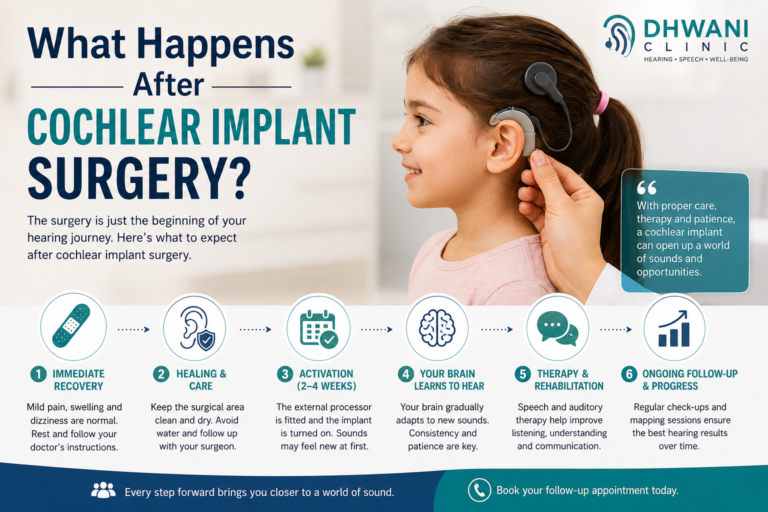
What Happens After Cochlear Implant Surgery? A Complete Recovery Guide
Hearing the world again is an exciting milestone for people who receive a cochlear implant. However, many patients and families wonder what happens after cochlear implant surgery. While the procedure itself is an important step, the recovery process, activation of the device, and ongoing hearing therapy are equally essential for achieving the best results.
At Dhwani Clinic, we guide children and adults through every stage of their cochlear implant journey—from pre-surgical counseling to post-implant rehabilitation—helping them adapt to their new hearing experience with confidence.
Immediate Recovery After Cochlear Implant Surgery
Cochlear implant surgery is generally performed under general anesthesia and usually takes about two to three hours. Most patients are discharged either on the same day or within 24 hours, depending on their overall health and recovery.
After surgery, it is normal to experience:
Mild pain or discomfort around the incision site
Swelling behind the ear
Temporary dizziness or balance issues
A feeling of pressure in the ear
Mild fatigue from anesthesia
These symptoms usually improve within a few days. Your surgeon will prescribe medications to manage pain and prevent infection.
Caring for the Surgical Site
Proper wound care is important to ensure smooth healing. Patients should:
Keep the incision clean and dry.
Avoid touching or scratching the surgical area.
Follow the doctor’s instructions regarding dressing changes.
Avoid swimming until cleared by the surgeon.
Attend all scheduled follow-up appointments.
If you notice excessive swelling, fever, drainage from the incision, or severe pain, contact your healthcare provider immediately.
At Dhwani Clinic, we educate families about proper post-operative care to reduce complications and support faster recovery.
When Is the Cochlear Implant Turned On?
Many people expect to hear immediately after surgery, but the implant is not activated right away.
Typically, the external speech processor is fitted and activated 2 to 4 weeks after surgery, once the surgical wound has healed completely.
During the activation appointment:
The external processor is connected.
The audiologist programs the implant.
Sound levels are adjusted according to the patient’s hearing needs.
Initial hearing responses are evaluated.
For many patients, the first sounds may seem unusual, robotic, or electronic. This is completely normal because the brain needs time to interpret these new signals.
The Brain Learns to Hear Again
A cochlear implant does not instantly restore normal hearing. Instead, it provides electrical signals that stimulate the hearing nerve. The brain gradually learns how to understand these sounds.
This adaptation process varies from person to person and depends on factors such as:
Age at implantation
Duration of hearing loss
Consistent device usage
Quality of rehabilitation
Family support
Overall hearing health
Children who receive implants at an early age often develop listening and speech skills more quickly than those implanted later.
Importance of Speech and Auditory Therapy
One of the most important parts of recovery is rehabilitation.
Speech therapy and auditory training teach the brain to recognize and understand sounds, words, and conversations.
Therapy may include:
Identifying environmental sounds
Recognizing voices
Understanding speech without lip reading
Improving pronunciation
Language development
Listening exercises
Communication training
At Dhwani Clinic, experienced speech-language pathologists create personalized therapy programs that match each patient’s age, hearing ability, and communication goals.
What Improvements Can You Expect?
Every patient’s progress is unique. Some individuals begin recognizing sounds within weeks, while others continue improving for months or even years.
Common improvements include:
Better Awareness of Sounds
Patients begin noticing everyday sounds such as:
Doorbells
Birds chirping
Running water
Car horns
Phone notifications
Improved Speech Understanding
With practice, many patients become better at understanding conversations, especially in quiet environments.
Enhanced Communication Skills
Children often show significant improvements in:
Vocabulary
Sentence formation
Speech clarity
School participation
Social interaction
Adults frequently report greater confidence in conversations with family, friends, and colleagues.
Regular Follow-Up Appointments
Cochlear implant users require regular visits with their audiologist to fine-tune the device.
These appointments may involve:
Adjusting sound settings (mapping)
Checking implant performance
Monitoring hearing progress
Testing speech recognition
Replacing worn accessories if needed
Several mapping sessions are usually needed during the first year to optimize hearing performance.
Returning to Daily Activities
Most patients recover quickly after surgery.
Generally:
Light activities can resume within a few days.
School or office may be resumed in one to two weeks, depending on recovery.
Strenuous exercise should be avoided until approved by the surgeon.
Contact sports should be discussed with your healthcare provider to protect the implant.
Following medical advice helps ensure proper healing and long-term success.
Tips for a Successful Recovery
Patients and families can improve outcomes by following these recommendations:
Wear the speech processor every day.
Attend all therapy sessions consistently.
Practice listening activities at home.
Stay patient during the adjustment period.
Encourage communication through daily conversations.
Keep follow-up appointments with the audiologist.
Protect the implant from water and physical damage unless using approved waterproof accessories.
Consistency plays a major role in achieving the best hearing results.
Emotional Support Is Also Important
Adjusting to hearing through a cochlear implant can be an emotional journey. Some patients may feel excited, while others may become frustrated as they adapt to new sounds.
Parents, caregivers, teachers, and therapists all contribute to creating a supportive environment that encourages progress. Celebrating small milestones helps build confidence and motivation throughout rehabilitation.
Why Choose Dhwani Clinic for Post-Cochlear Implant Rehabilitation?
Successful cochlear implantation extends far beyond the operating room. Continuous rehabilitation and professional guidance are essential for maximizing hearing outcomes.
At Dhwani Clinic, we provide comprehensive post-cochlear implant care, including:
Expert speech and language therapy
Auditory verbal therapy
Regular hearing assessments
Personalized rehabilitation plans
Family counseling and education
Ongoing progress monitoring
Our multidisciplinary approach ensures that every patient receives individualized support throughout their hearing journey.
Conclusion
What happens after cochlear implant surgery is just as important as the surgery itself. Recovery includes wound healing, activation of the implant, hearing rehabilitation, speech therapy, and regular follow-up care. While improvement takes time, dedication and consistent therapy can lead to remarkable gains in hearing, speech, and overall quality of life.
If you or your child is preparing for cochlear implant surgery or requires expert rehabilitation afterward, Dhwani Clinic is committed to providing compassionate, evidence-based care to help every patient achieve their fullest hearing potential.